Ebola Virus: Symptoms, Causes, Transmission, Prevention, and Treatment Guide
What Is Ebola Virus?
The Ebola Virus Disease is a rare but severe infectious disease caused by viruses from the Ebolavirus genus. Ebola can affect humans and some animals, including primates. The disease is known for causing outbreaks with high fatality rates, especially in parts of Africa.
Ebola gained worldwide attention after the major West African outbreak between 2014 and 2016, which became one of the deadliest epidemics in modern history. The virus spreads through direct contact with infected bodily fluids and can rapidly infect communities when proper health measures are not followed.
This article explains everything you need to know about Ebola virus disease, including symptoms, transmission, prevention, treatment, history, and current medical research.
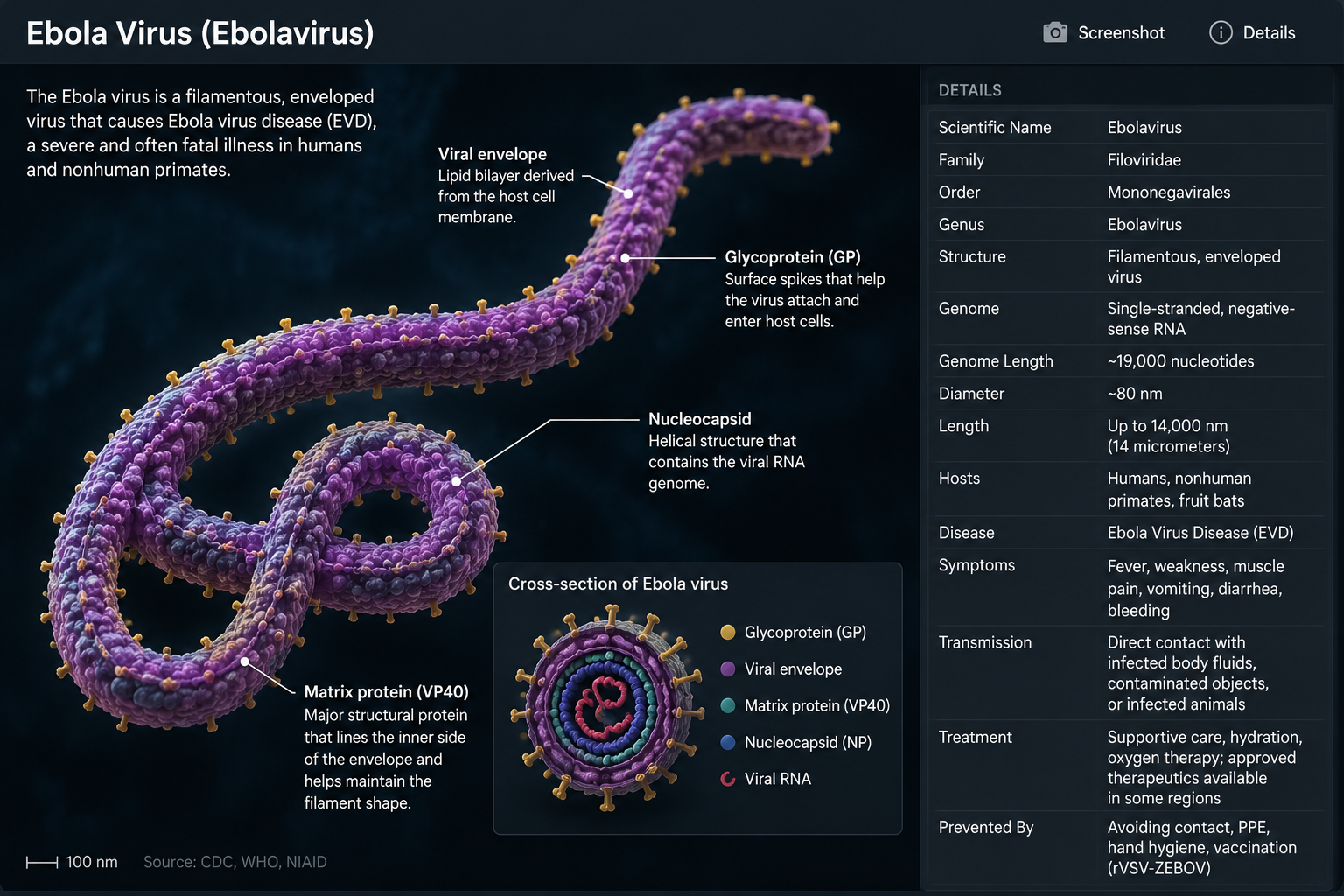
Virus Ebola
Table of Contents
- Introduction to Ebola Virus
- History of Ebola Outbreaks
- Types of Ebola Viruses
- How Ebola Spreads
- Symptoms of Ebola Virus Disease
- Stages of Ebola Infection
- Diagnosis and Testing
- Treatment Options
- Ebola Vaccines
- Prevention Methods
- Ebola Survival Rate
- Ebola vs Other Viral Diseases
- Global Response to Ebola
- Frequently Asked Questions
- Conclusion
History of Ebola Virus
The Ebola virus was first identified in 1976 near the Ebola River in what is now the Democratic Republic of the Congo. Around the same time, another outbreak occurred in Sudan.
Since then, multiple Ebola outbreaks have occurred across Central and West Africa. The largest outbreak happened from 2014 to 2016 in Guinea, Liberia, and Sierra Leone. Thousands of people lost their lives, and healthcare systems were heavily affected.
Major Ebola outbreaks include:
| Year | Location | Impact |
| 1976 | Congo & Sudan | First known outbreaks |
| 1995 | Kikwit, Congo | Major urban spread |
| 2000 | Uganda | Hundreds infected |
| 2014–2016 | West Africa | Largest Ebola epidemic |
| 2018–2020 | DR Congo | Complex outbreak in conflict areas |
Types of Ebola Viruses
Scientists have identified several species of Ebola viruses:
- Zaire ebolavirus
- Sudan ebolavirus
- Bundibugyo ebolavirus
- Taï Forest ebolavirus
- Reston ebolavirus
Among these, the Zaire strain has caused the deadliest outbreaks.
How Ebola Virus Spreads
Ebola spreads through direct contact with infected fluids from humans or animals.
Common Transmission Methods
The virus can spread through:
- Blood
- Saliva
- Sweat
- Vomit
- Urine
- Feces
- Breast milk
- Semen
People may become infected by:
- Touching infected patients
- Contact with contaminated medical equipment
- Handling infected animals
- Participating in unsafe burial practices
Does Ebola Spread Through Air?
Unlike influenza or COVID-19, Ebola is not considered an airborne disease in normal situations. Transmission mainly occurs through direct physical contact.
Symptoms of Ebola Virus Disease
Symptoms usually appear between 2 and 21 days after exposure.
Early Symptoms
Common early signs include:
- Fever
- Severe headache
- Muscle pain
- Weakness
- Fatigue
- Sore throat
Advanced Symptoms
As the disease progresses, symptoms may include:
- Vomiting
- Diarrhea
- Rash
- Internal bleeding
- External bleeding
- Organ failure
Some patients may experience bleeding from the eyes, gums, or nose in severe cases.
Stages of Ebola Infection
- Incubation Stage
The infected person does not show symptoms but may carry the virus.
- Early Illness Stage
Flu-like symptoms begin to appear, including fever and body aches.
- Gastrointestinal Stage
Severe vomiting and diarrhea can lead to dehydration and weakness.
- Critical Stage
Patients may develop bleeding complications, shock, and organ failure.
- Recovery or Death
Survivors slowly recover, while severe untreated cases may become fatal.
How Ebola Is Diagnosed
Doctors use laboratory testing to confirm Ebola infection.
Diagnostic Methods
Common tests include:
- PCR testing
- Antigen detection
- Antibody testing
- Virus isolation
Because Ebola symptoms can resemble malaria, typhoid, or dengue fever, laboratory confirmation is essential.
Ebola Treatment Options
There is no universal cure for Ebola, but modern treatment greatly improves survival rates.
Supportive Care
Doctors focus on:
- Hydration
- Oxygen therapy
- Blood pressure stabilization
- Electrolyte balance
- Treating secondary infections
Antibody Treatments
Several therapies have shown success in reducing mortality:
- Monoclonal antibody treatments
- Experimental antiviral medicines
Early treatment significantly increases survival chances.
Ebola Vaccines
Scientists developed effective vaccines after the West African outbreak.
rVSV-ZEBOV Vaccine
The most widely used Ebola vaccine helps protect against the Zaire strain and has been used successfully during outbreak responses.
Vaccination programs focus on:
- Healthcare workers
- Close contacts of infected patients
- High-risk communities
How to Prevent Ebola
Preventing Ebola requires strong public health measures.
Personal Protection Tips
- Avoid contact with infected bodily fluids
- Wash hands regularly
- Use protective equipment
- Avoid handling dead animals
- Practice safe burial procedures
Healthcare Prevention
Hospitals reduce transmission through:
- Isolation wards
- Protective clothing
- Sterilized equipment
- Contact tracing
Ebola Survival Rate
The fatality rate varies depending on the outbreak, virus strain, and healthcare access.
Average fatality rates range from 25% to 90%, but modern medical care has improved survival outcomes considerably.
Early diagnosis and supportive treatment are critical factors in recovery.
Ebola vs Other Viral Diseases
| Disease | Transmission | Fatality Rate | Vaccine Available |
| Ebola | Bodily fluids | Very high | Yes |
| COVID-19 | Airborne droplets | Lower | Yes |
| Influenza | Airborne | Low | Yes |
| Dengue | Mosquito bites | Moderate | Limited |
Global Response to Ebola
International organizations play a major role in Ebola control.
Key organizations include:
- World Health Organization
- Centers for Disease Control and Prevention
- Médecins Sans Frontières
Their efforts include:
- Emergency response teams
- Vaccination campaigns
- Community education
- Medical research
- Outbreak monitoring
Long-Term Effects in Survivors
Some Ebola survivors experience ongoing health issues, including:
- Joint pain
- Vision problems
- Fatigue
- Psychological stress
- Neurological complications
Medical follow-up is important after recovery.
Frequently Asked Questions About Ebola
Is Ebola contagious?
Yes. Ebola is highly contagious through direct contact with infected bodily fluids.
Can Ebola be cured?
There is no single guaranteed cure, but supportive treatment and antibody therapies improve survival.
Is Ebola airborne?
Ebola is not generally spread through the air like influenza or COVID-19.
Where is Ebola most common?
Most outbreaks have occurred in Central and West Africa.
Can people survive Ebola?
Yes. Many people survive Ebola, especially with early medical treatment.
Important Facts About Ebola Virus
- Ebola is a severe viral hemorrhagic fever.
- The disease can spread rapidly in healthcare settings.
- Early isolation reduces transmission risk.
- Vaccines now help control outbreaks.
- Public awareness is essential for prevention.
Conclusion
The Ebola Virus Disease remains one of the world’s most dangerous infectious diseases, but advances in medicine, vaccines, and outbreak response have significantly improved global preparedness.
Understanding Ebola symptoms, transmission methods, prevention strategies, and treatment options is essential for protecting communities and reducing future outbreaks. Continued international cooperation and scientific research are critical in the fight against Ebola.